// I may receive a commission on purchases made from links.
Danganronpa is a hard series to talk about (and no, not just because Danganronpa is such a hard word to pronounce). It’s a mystery series, and much like the case in my review of Knives Out, it’s hard to talk about what makes it good without spoiling the inevitable plot twists. Still, I will do my best.
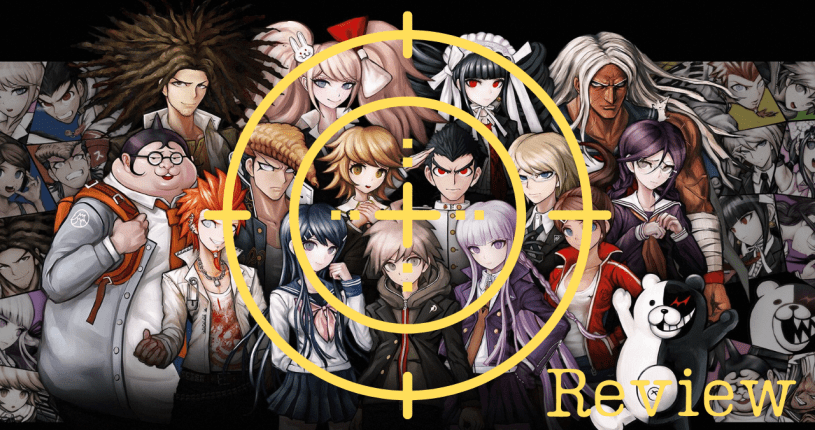
In the first game, you play a high school student named Makoto who has just been accepted into Hope’s Peak Academy, a school that is reserved for only the most gifted students in the world. Everyone there is an ultimate. Ultimate swimmer, ultimate baseball player, ultimate biker gang leader, ultimate pop idol, ect.
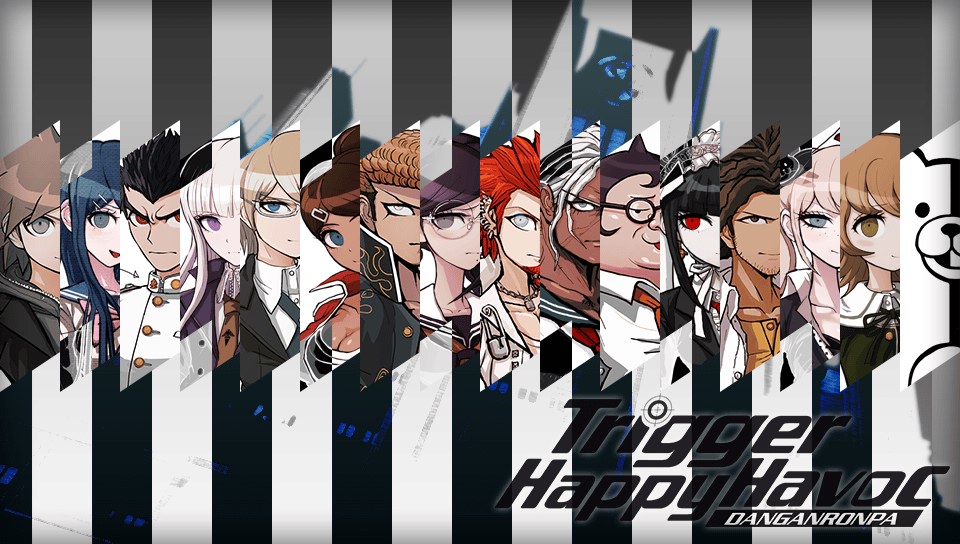
Mokoto is excited about being accepted, but then something strange happens. He wakes up in one of the classrooms, unsure how he got there, and all the windows are sealed behind thick metal plates. He meets up with all the other students in the auditorium, where they meet an animatronic bear named Monokuma, who tells them that they are all trapped inside the school and in order to get out, one of them must commit a murder without the others finding out who-done-it. If the class finds out who is guilty, or “blackened,” as the game describes it, then the killer is executed, but if they’re wrong, then everyone other than the killer dies.
Hell of a hook, right?
Danganronpa is a lot of different things, none of which really communicate the feeling you get from it when you play. It’s an anime-mystery style visual novel, a rhythm game, a Persona-esque Japanese community simulator; it’s even technically labeled as a shooter… technically.
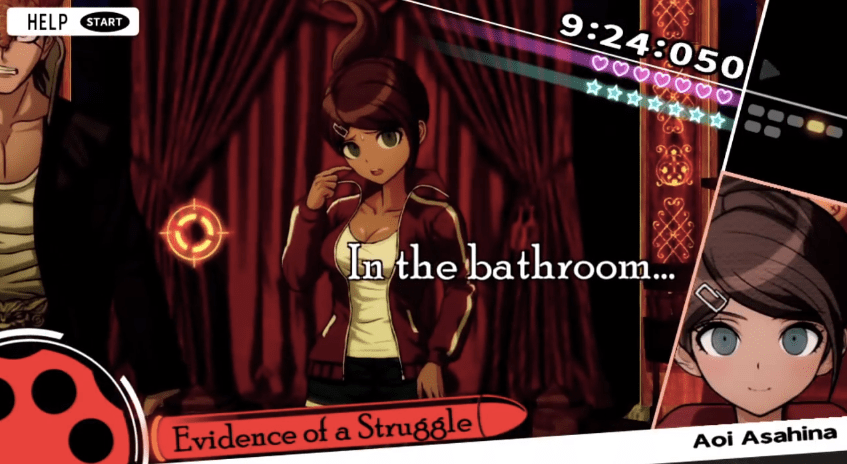
…but it’s really such a messy amalgamation of all those things and more that it sort of creates a category unto itself. None of that is to say that the game doesn’t have a clear identity, though. From its unique visual style to its un-bear-able love for puns, this is a series that knows exactly what it is and what it wants to show its audience. It has these cute, slice-of-life, getting to know each other segments between Makoto and the other students that transition suddenly to vivid depictions of horror and the jagged slip into madness.
The murders aren’t as simple as Colonel Mustard in the library with a wrench. They usually involve complex circumstances, the cataloguing of alibis, and various other means of narrowing down a list of potential suspects while collecting as much information as you can about the crime. Once you’ve gathered all the evidence, or “truth bullets,” you meet up with the rest of your surviving classmates for a “class trial” where you have to put them together through a series of mini-games on order to solve the murder.
The logic is pretty sound 95% of the time, but every once in a while, the game seems to expect some grand leaps in logic that didn’t make much sense to me, even after the mystery was solved. I don’t know if that’s due to the inevitable cultural differences of an American playing a Japanese game or if it’s just bad writing, but it was frustrating.
My other issue is that sometimes the pseudo-philosophy that the series gets into can be a little long-winded. I found myself wishing I could skip through clumps of the visual novel where the characters rambled about hope and despair for a lot longer than was necessary. A good editor could have helped a lot there.
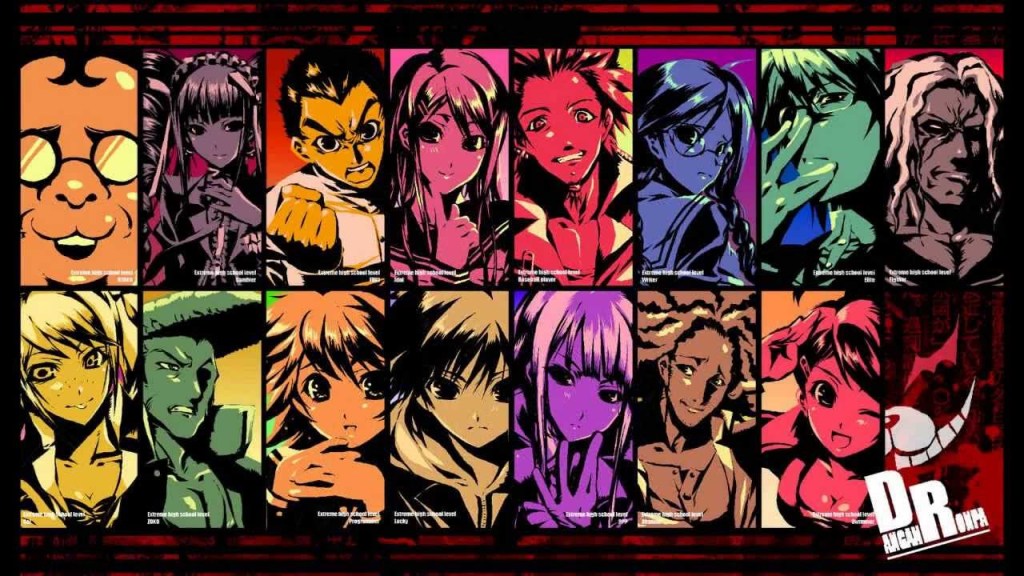
Still, the games’ pros more than outweigh the cons, and all three of them are well worth playing. Each of them expands on the one before it in new and interesting ways without compromising the series identity.
There’s another game called Danganronpa Another Episode: Ultra Despair Girls, which is a side story and not part of the main series. I played a bit of it, but wasn’t as into it as the main series.
If you’d like to play any of the games, I’ve linked the trilogy collections here:
PS4: https://amzn.to/4u63HX9
Switch: https://amzn.to/4rH2rIq
You can come visit me at twitch.tv/codydcampbell to hang out and chat while I play new games.
Thanks for reading,
-Cody
 Cody D. Campbell